Building a Maintenance Process
Turn Equipment Records Into Planned Work
A maintenance database earns its keep when it changes a decision before a breakdown. Set clear service triggers, make field issues easy to report, and keep asset status connected to project planning.
Set service intervals the team can follow
Use manufacturer guidance, calendar dates, operating intervals, inspection requirements, and company experience to define the next service. Record the trigger and responsible person in the equipment record. The maintenance plan should give the team enough notice to arrange parts, labor, replacement equipment, or a different project sequence. A due date that appears only after the machine is needed will not prevent downtime.
Give operators a direct inspection workflow
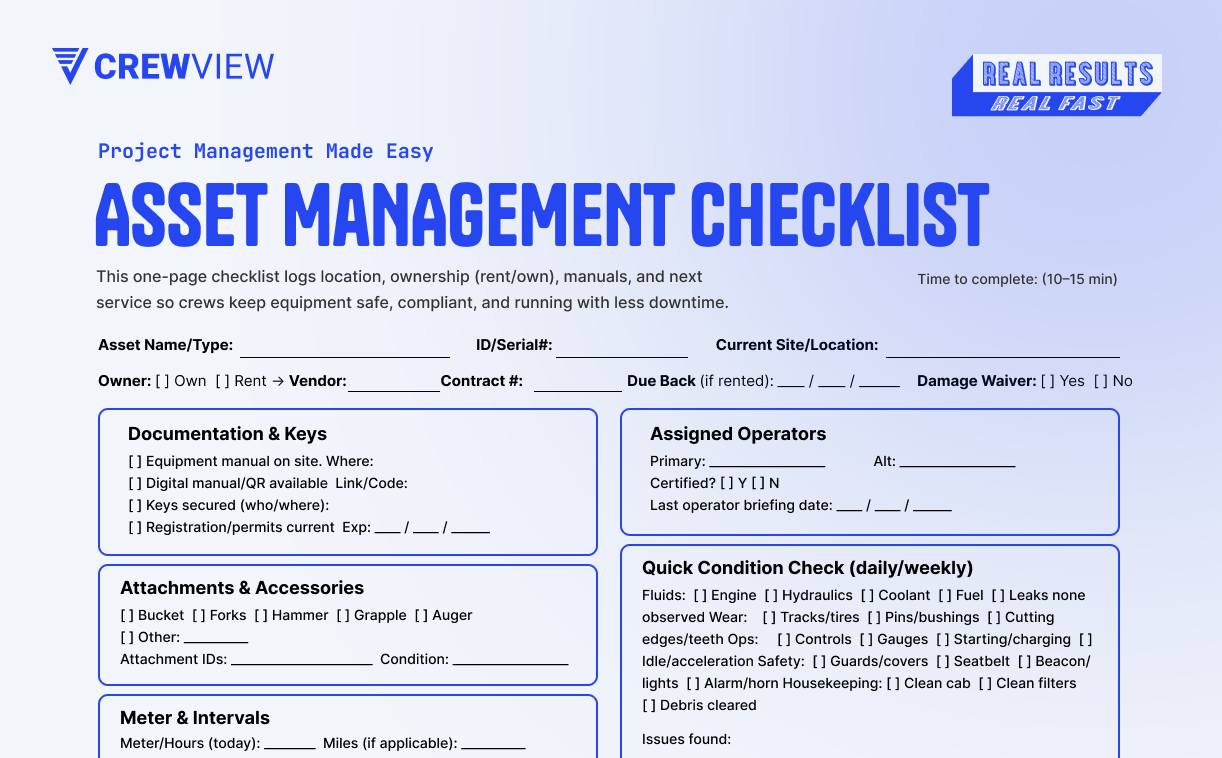
Operators often notice a leak, damaged guard, unusual noise, or performance change before anyone in the office. Give the field a short inspection and issue-reporting process that works on a phone. Keep photos, notes, signatures, and the completion time with the asset. The equipment manager can then assess the issue, change its status, and decide whether the machine can continue working safely.
Make asset status control the next assignment
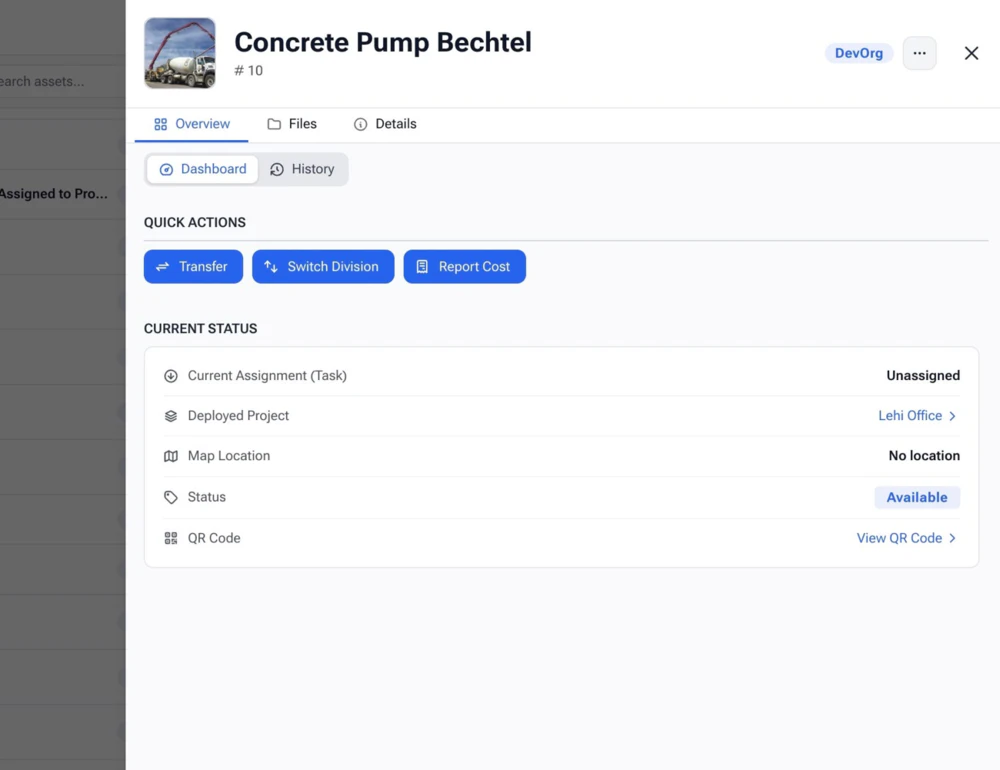
Use a small set of statuses with clear meanings. Available should mean the asset can be assigned. Under repair and out of service should keep it out of the active plan until an authorized person changes the record. When schedulers and project managers can see that status, they can move equipment, arrange a rental, or change the crew plan before people arrive at a job with no machine.
Review history before repairing or replacing
Maintenance history can show repeated failures, rising service needs, and assets that spend too much time idle. Review that record with assignment and utilization information before approving another repair, rental, transfer, or purchase. The lowest repair invoice is not always the lowest operating cost. CrewView keeps the service history beside the project and crew assignments that show how the equipment supports the business.
Assign ownership for every maintenance step
Name who reviews inspections, schedules service, changes asset status, and returns equipment to available use. Software cannot close a maintenance task when nobody owns the decision. Define the evidence required for completion and keep that record with the asset. Clear responsibility also helps the field know where to report a problem and helps managers distinguish equipment waiting on service from equipment waiting on approval.