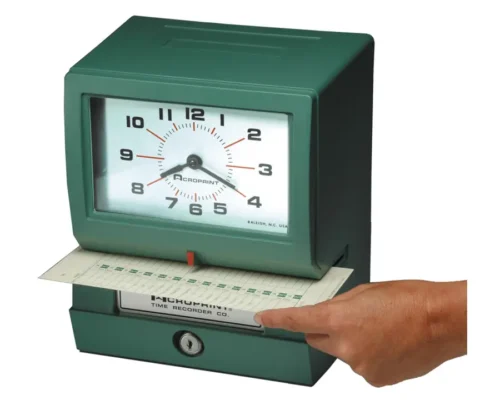
Incorrect time records cost construction companies money, but not every error is theft. A worker may forget to clock out, choose the wrong project, or reconstruct a long day from memory. Intentional misreporting can happen too. Treating every mismatch as misconduct makes it harder to find the actual cause.
A fair timekeeping process reduces mistakes, makes unusual entries easier to spot, and gives employees a clear way to correct the record.
Set rules people can follow
Define when the paid day begins and ends, how travel time is handled, who records time, and what to do when an employee moves between projects. Cover meal periods, corrections, and supervisor approvals as well.
Put the policy in writing and train every role. Timekeeping rules should also match applicable labor agreements and employment laws. If the policy is difficult to explain, it will be difficult to enforce consistently.
Make field entry simple
The longer employees wait to record time, the less accurate the details become. Give crews a GPS time clock built for construction that they can use where the work happens.
Keep required fields limited to information the company will actually review. If employees have to navigate a long form at the beginning and end of every shift, they will look for shortcuts.
Review exceptions quickly
Supervisors should review time while the work is still fresh. Focus attention on exceptions such as:
- Missing clock-ins or clock-outs
- Hours assigned to the wrong project or task
- Overlapping entries
- Unexpected overtime
- Repeated manual corrections
An exception is a prompt for a question, not proof of wrongdoing. Ask what happened, correct the record, and look for patterns over time.
Compare time with the operation
Time records become more useful when they are connected to crew assignments and project work. If an employee records hours on a job where they were not scheduled, a manager can check whether the assignment changed or the time entry is wrong.
This context helps the company distinguish a field change from a payroll problem without relying on memory alone.
Apply the policy consistently
Employees notice when rules vary by supervisor or crew. Use the same correction and approval process across the company. Document repeated issues and give the employee a chance to respond before taking action.
The goal is accurate pay for employees and accurate labor cost for the company. CrewView ties construction timecards to crews and projects, giving supervisors and office teams one place to review the record. Schedule a walkthrough to see how the workflow fits your operation.